Elphaba and Glinda from Wicked. Superman. The Addams Family. HUNTR/X from KPop Demon Hunters. Lilo & Stitch. Sabrina Carpenter and Olivia Rodrigo.
According to a Sept. 30 Good Housekeeping magazine story, “We’re Calling It: These 10 Halloween Costumes Will Be Everywhere in 2025,” those will be among the Halloween costumes this year.
Despite this newsletter’s commitment to “being your authentic self,” we’re going to step into the make-believe world in this issue and take a look at five creepily brilliant public relations lessons Halloween teaches us.
Halloween PR Lesson #1: Rebranding a Very Dark Beginning
If Halloween were a brand launching today with its original messaging, “celebrate the dead, dress up to confuse evil spirits, mark the season when boundaries between worlds dissolve,” it would be the worst product pitch in PR/marketing history.
Your PR team would be fired. Your investors would flee.
Yet somehow, this holiday with deeply suspect (and debated) origins has pulled off one of history’s most successful rebrands, evolving from a controversial pagan ritual into a secular celebration that drives employee engagement, strengthens workplace culture, and generates massive consumer spending.
So how did a festival associated with death, darkness and demons become the second-highest grossing commercial holiday in America? Let’s take a look…
Halloween’s origin story reads like a PR nightmare. The holiday traces back over 2,000 years to Samhain (pronounced “sow-in”), an ancient Celtic festival marking the end of harvest season and the beginning of winter. The Celts believed that on October 31, the boundary between the living and the dead grew dangerously thin, allowing spirits to cross over into the mortal world.
To ward off these potentially malevolent entities, the Celts lit massive sacred bonfires, wore costumes made from animal heads and skins, and performed rituals involving animal sacrifices.
It wasn’t exactly family-friendly content.
When Christianity arrived in Celtic regions around 300 AD, church leaders faced a challenge: How do you convert people who are deeply attached to their spiritual traditions? The solution was strategic rebranding. In the 8th century, Pope Gregory III designated November 1 as All Saints’ Day (also called All Hallows’ Day), effectively co-opting the timing of Samhain. The night before became “All Hallows’ Eve,” which eventually contracted to “Halloween.”
But the rebranding wasn’t complete. Throughout the Middle Ages, Halloween retained darker associations. Churches too poor to display saints’ relics let parishioners dress as saints instead — a practice some believe was itself a Christianization of pagan costume traditions. European villages held pageants featuring the “danse macabre,” with people dressing as corpses from various social classes as a memento mori reminder that death comes for everyone.
Ewww.
By the time Irish immigrants brought Halloween to America in the 1840s during the Great Potato Famine, the holiday still had serious image problems. Early 20th-century newspaper accounts described trick-or-treating children as “youthful tormentors,” “robbers,” and “gangs” making demands on adults. Youth vandalism on Halloween night was rampant. In 1933, teenage boys caused such extensive property damage that communities began searching for ways to keep kids occupied — and that’s when the candy companies saw their opening.
Halloween PR Lesson #2: Pivot & Profit
Enter the confectionery industry with a brilliant pivot in implementing a crisis management strategy. And it all started with knowing the audience (a vital step in all communications).
In the mid-20th century, amid parental fears about tampered candy and dangerous strangers (largely unfounded myths, but powerful nonetheless), candy manufacturers positioned individually-wrapped, factory-sealed treats as the “safe” alternative to homemade goods. Homemade candy and baked goods became viewed with suspicion, while branded, packaged candy was marketed as the responsible choice.
Brach’s Candy Company was among the first to capitalize on Halloween, advertising candy corn specifically for the holiday as early as 1953. Other companies quickly followed, introducing “fun-sized” candy bars — a stroke of marketing genius that reframed portion control as entertainment.
The message was clear: homemade equals boring and potentially dangerous; fun-sized equals FUN and safe.
The strategy worked spectacularly. Today, Americans spend $3.9 billion on Halloween candy annually, contributing to total Halloween spending of $13.1 billion in 2025. That’s more than the GDP of some small nations — all generated by a holiday that once involved animal sacrifices and warding off ghosts.
Halloween PR Lesson #3: Halloween Can Be an Employee Engagement Strategy
But here’s where it gets really interesting for PR pros: Halloween didn’t just survive its controversial origins; it became a tool for building organizational culture and employee engagement.
Today, Halloween has completed its transformation from pagan death festival to corporate team-building opportunity.
According to a survey of 953 full-time employees conducted by workplace culture company O.C. Tanner, those employees who are able to dress up at work show significantly higher engagement than those who are not allowed to do so. Specifically, 73 percent of employees who can dress up at work are highly motivated to contribute to the success of their organization, compared to just 58 percent of those who cannot.
That’s a 15-percentage-point difference in motivation based solely on whether employees can wear a costume to work. Let that sink in.
The benefits extend beyond individual motivation. Organizations with a vibrant corporate culture enjoy employee engagement that’s 72% higher than their counterparts.
Research also reveals a:
- 17% increase in productivity among highly engaged teams
- 59% decrease in employee turnover
- 41% reduction in rates of absenteeism
But the workplace engagement wins don’t stop there.
Studies show that team-building activities like costume contests can increase employee engagement by up to 25%. This isn’t just about having fun — though that’s important too. A recent report from Gallup shows that employees who feel a sense of community at work are 40% more likely to perform better and 70% more likely to stay with their company long-term.
The psychology behind this makes sense. Halloween provides employees with a chance to express creativity, try on new identities, and connect with colleagues in low-stakes social situations.
O.C. Tanner’s vice president Gary Beckstrand explains that Halloween is “indicative of a festive time, which gives employees a chance to gather and be social,” which in turn boosts workplace morale. The ability to celebrate with coworkers falls under emotional well-being in the office, which is just as important as physical well-being.
It’s interesting that about 57% of U.S. households participate in Halloween trick-or-treating, with participation rising to 70% among households with kids under age 6. But increasingly, Halloween isn’t just for kids anymore. Young adults have reinvented the holiday, making it bigger, more elaborate, and more expensive than ever.
This demographic shift means that workplace Halloween celebrations resonate particularly well with millennial and Gen Z employees who grew up celebrating the holiday and want to continue the tradition in professional settings.
Halloween PR Lesson #4: Your House’s PR Halloween Reputation is at (the) Stake
Here’s something most people don’t think about: your Halloween candy choices are a form of your household’s brand management. Every October 31st, you’re making a statement about your household’s values, generosity, and social awareness. Hand out the wrong candy, and your reputation in the neighborhood can suffer lasting damage.
Hmm… maybe I better not hand out the bag of Starbursts leftover from last year.
Who wants the shame of being “the house that hands out the bad trick-or-treat offerings,” like fruit or no-name candy? Leslie Gray Streeter, a columnist for The Banner (a Baltimore publication), tells the story in her Oct. 31, 2024 article, “The horror of being the bad Halloween candy house,” about parents in one neighborhood who handed out raisins, i.e., “nature’s candy,” for their treats. Neighborhood friends confronted their children the next morning: “We like your parents. But can you tell them to never, ever hand out raisins? Like, ever again?”
The social pressure is real, and kids are brutally honest evaluators of your candy strategy. When the food website Eater interviewed “trick-or-treat experts” (children), the findings were decisive: Reese’s Peanut Butter Cups and full-size candy bars earned enthusiastic approval, while toothbrushes, raisins, and dental floss were universally despised. As one 8-year-old named Elena succinctly put it: “No one wants healthy stuff.”
The data backs this up. According to a survey by dental company Shiny Smile Veneers of 1,000 individuals across the United States, Reese’s Peanut Butter Cups are the most beloved Halloween treat in America, earning more than half of the gathered votes.
On the flip side, candy corn topped the list of most-hated candies, followed by Good & Plenty (that chalky black licorice nightmare that’s been unchanged since 1893), and Necco wafers, which taste like what one person described as “chalk” or “Tums — but that would be a compliment.”
Consumer behavior research reveals fascinating insights about Halloween candy purchasing patterns. About 51% of households spend between $15 and $39 on treats, while approximately 17% are price-indifferent and spend more than $50. Those big spenders tend to be households with annual incomes greater than $50,000.
Nearly 80% of shoppers start their Halloween candy shopping anywhere from a few days to a couple of weeks before Halloween. About 17% of people wait until the day before or day of to buy treats. Nearly a third of people are price-conscious and buy treats whenever they are on sale — these shoppers are more likely to be women, households with kids under age 6, or people whose annual household income is under $35,000.
What candy do people choose? Chocolates win at 72%, with sweet candies close behind. Sour candies are also preferred at 41%, but salty snacks lag far behind in fourth place at only 16%. Shoppers do account for kids with special needs, with many households prepared with allergy-safe snacks (16%), small toys (14%), or healthy snacks (11%).
The decision-making process is revealing: People tend to buy treats they think kids will like the most (53%) followed closely by treats they themselves like the most (45%) — perhaps hoping for leftovers. They’re not necessarily concerned about choosing packages with the lowest price per piece (17%), but for simplicity’s sake, they do try to choose packages with more pieces (27%).
Here’s a pro tip for neighborhood reputation management: To receive a full handful of treats rather than just one piece, look for households led by 25- to 34-year-olds, or those earning modest incomes, regardless of whether they have kids. They’re still young and young at heart, ready to fill those bags.
The stakes of getting your candy selection wrong go beyond hurt feelings. Old candy is a real problem. According to the Shiny Smiles Veneers study, 45% of trick-or-treat bags include candy that is “old,” and 12% of surveyed candy-givers even admit to handing it out themselves. If you’re that house, the kids know.
Trust me, they — like employees — talk.
Halloween PR Lesson #5: Halloween’s a PR Success Story
Americans will spend $13.1 billion on Halloween in 2025, including $4.3 billion on costumes, $4.2 billion on decorations, and $3.9 billion on candy. That’s roughly the GDP of Rwanda or Madagascar — all generated by a holiday that originated as a Celtic death festival that church leaders once viewed as dangerously pagan.
This is perhaps one of the greatest PR/marketing rebranding success stories in history.
Think about it:
- A holiday once associated with animal sacrifices and evil spirits is now a tool for building workplace community and employee engagement.
- A celebration that parents in the 1930s viewed as juvenile delinquency is now considered wholesome family fun.
- Candy that kids used to extort from neighbors with threats of property damage is now voluntarily distributed by adults who carefully curate their selections to maintain neighborhood social standing.
If Halloween were a client walking into a PR firm today with its original messaging, it would likely be told they need a complete overhaul. The remarkable thing is that Halloween already did that overhaul — organically, over centuries, through the combined efforts of religious institutions, candy corporations, community organizations, and millions of families who simply wanted an excuse to have fun in late October.
The result? A holiday that simultaneously honors ancient traditions (even if most people don’t know what those traditions actually were) while serving thoroughly modern purposes: building community, expressing creativity, giving children agency and adventure, and providing adults with a socially sanctioned opportunity to be playful.
And if you hand out raisins instead of real candy? Well, that’s just bad PR.
The 3 Big Takeaways
- For your house: Spend the extra $10 on name-brand chocolate. Your neighborhood reputation depends on it. Households earning over $50K typically spend $50+ on candy, so don’t be the cheap house on a nice block.
- For your workplace: If 73% of employees who can wear costumes are more motivated, and costume contests boost engagement by 25%, the ROI on a Halloween celebration is obvious. Make it opt-in but enthusiastically supported.
- For your career: Understanding how a controversial 2,000-year-old festival became a $13 billion industry teaches you everything you need to know about successful rebranding, audience understanding, and cultural adaptation.
This Halloween, whether you’re at your door handing out candy or at the office in costume, remember: you’re participating in one of history’s most successful PR campaigns. A holiday that probably should have died out centuries ago has instead become more popular than ever — all because people figured out how to give their audiences what they actually wanted, wrapped in packaging they could accept.
There’s some ghoulish genius wrapped up in all of this.
What did you dress up as this Halloween? Do share!
Stay authentic — except you have permission to be someone/something else for Halloween!
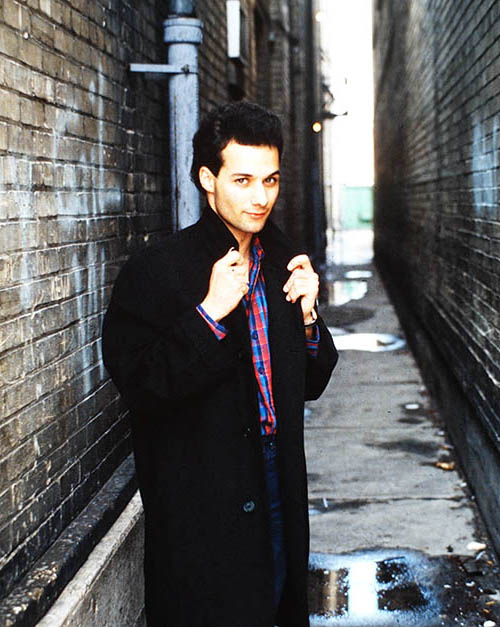
Jeffery E. Pizzino, APR (seen here in a vintage photo circa 1983 serendipitously doing a Clash impersonation in a since-forgotten location) is a spin-free public relations pro who is passionate about telling the why of your story with clarity, impact and authenticity. He began his PR career in 1987 at Ketchum Public Relations in New York City but has spent the majority of his career as a solopreneur. He’s the Chief Authentic Officer of the Johnson City, TN-based public relations firm, AuthenticityPR. He also functions as the fractional CCO for technology startup Converus.
Jeff has an MBA in Management from Western International University and a Bachelor of Arts degree in Communications — with an emphasis in PR — from Brigham Young University (rise and shout!). He’s a native of Milwaukee, Wisconsin, but also holds an Italian citizenship. Jeff and his storyteller wife Leticia have four children and four grandchildren. In his extremely limited nonwork hours, he studies italiano, practices guitar, write songs, gardens, disc golfs, reads, listens to New Wave music, serves in his church, watches BYU football, and plays Dominion and Seven Wonders. Email Jeff.