NOTE: Some don’t believe AI should be used for content creation. Olivia, a student in my online Social Media Production class at East Tennessee State University in Johnson City, is one such person. It’s helpful to know both sides of this argument. Recently, my students were assigned to write a paper about AI. Here’s part 1 of 2 of her paper titled, “Generative AI in Content Creation: A Comprehensive Analysis of Why AI Is Just as Bad as It Is Good in Creative Fields.” Hope you enjoy it. –JP
In recent years, Artificial Intelligence (AI) has become more prevalent in society.
NASA defines AI as “computer systems that can perform complex tasks normally done by human-reasoning, decision making, creating, etc.” (NASA, 2024). In 2022, OpenAI made conversational AI widely accessible by releasing ChatGPT to the public.
Since then, artificial intelligence has only become more proliferative. It’s used for many different reasons, by many different kinds or individuals and organizations. It’s changed the way many different industries operate, such as technology, medicine, law and more.
The AI Takeover of Communications Careers
Specifically, generative AI has rapidly taken over creative content fields like public relations, marketing, and advertising. Many professionals use generative AI to brainstorm, refine, and even generate content. While it has quickly become an amazing tool, it can just as easily be misused.
A big reason AI is so popular is because it’s an amazing tool for brainstorming, getting rid of busy work like proofreading, and overall making work easier.
AI’s Weaknesses
However, AI can actually increase the workload and slow down progress. It’s not uncommon for AI to misunderstand the prompts provided to it. It’s very important to have a very detailed and direct prompt to get the correct results. If what the artificial assistant provides is not the intended result, the prompt must be broken down and redone to then try again. By the time the prompt is corrected, the work could’ve been completed by a human element.
In addition to misunderstanding, once the intended information is provided it MUST be fact checked. AI does not think and it does not know things the way people do. It relies on collected data rather than understanding. Because of this, artificial intelligence tends to be wrong.
Broniatowski, a professor of engineering management and systems engineering at George Washington University, said, “Generative AI operates by identifying patterns in massive datasets and using those patterns to create new content. The reliance on large, unfiltered datasets also introduces risks. Training data can include misleading or harmful content, meaning AI systems may generate responses that sound plausible but are inaccurate.” (UM, 2026).
My Experience Using AI
I’ve experienced this firsthand. I started college out as a computer science student, so I used AI frequently to cut down my workloads and quickly find information I needed. When I switched to focus on public relations and advertising, it became increasingly difficult to use.
I often found that the information ChatGPT would give me was wrong, even when filtering the prompt to be more specific. I eventually determined that it was easier and more efficient to do the work myself. Instead of spending hours correcting prompts and fact checking information, I was able to hunt down primary sources that were exactly what I needed in half the time. Even with brainstorming, when I had writer’s block, I would use generative AI to help get ideas and guide my writing, but I ended up being very disengaged with what I was creating.
When we let generative AI do the work for us, it becomes harder to create ideas, and we become less invested in those ideas. In my case, writer’s block is not because I don’t know what to write, but rather because I don’t have anything to say. Though, when I finally get that idea, I can immediately click with it. My writing is better because I have something to add to the conversation, as opposed to just writing because I must get something done.
_______________________
References
Advertising giant WPP set to axe 1,000 more jobs as AI reshapes the industry. The Economic Times. (n.d.-a). https://economictimes.indiatimes.com/news/international/global-trends/advertising-giant-wpp-set-to-axe-1000-more-jobs-as-ai-reshapes-the-industry/articleshow/133668164.cms?from=mdr#google_vignette
Advertising giant WPP set to axe 1,000 more jobs as AI reshapes the industry. The Economic Times. (n.d.-b). https://economictimes.indiatimes.com/news/international/global-trends/advertising-giant-wpp-set-to-axe-1000-more-jobs-as-ai-reshapes-the-industry/articleshow/133668164.cms?from=mdr
Aruna Ranganathan | Xingqi Maggie Ye, Aruna RanganathanAruna Ranganathan is associate professor of management and organizations at the Haas School of Business, Ranganathan, A., & Ye, X. M. (2026, March 3). Ai doesn’t reduce work-it intensifies it. American Association for Physician Leadership – Inspiring Change. Together. https://www.physicianleaders.org/articles/ai-doesnt-reduce-work-it-intensifies-it
Broniatowski, D. (n.d.). How generative AI works-and why it can mislead users. How Generative AI Works-and Why It Can Mislead Users | University of Maryland Institute for Advanced Computer Studies. https://www.umiacs.umd.edu/news-events/news/how-generative-ai-works-and-why-it-can-mislead-users
Djajapranata, C. (2026, July 27). Ai is creative. but can it replace human creativity?. Georgetown University. https://www.georgetown.edu/news/ai-human-creativity-research/
Duivenvoorde, B. (n.d.). Generative AI and the future of marketing: A consumer protection perspective – sciencedirect. https://www.sciencedirect.com/science/article/pii/S2212473X25000148
Explained: Generative AI. MIT for a Better World. (2023, November 16). https://betterworld.mit.edu/explained-generative-ai/
Libguides: Ai tools and resources: Ai history. AI History – AI Tools and Resources – LibGuides at University of South Florida Libraries. (n.d.). https://guides.lib.usf.edu/AI/history
McLaughlin, G. (n.d.). How AI is driving PR innovation. www. https://www.prsa.org/article/how-ai-is-driving-pr-innovation-ST-June25
NASA. (2024, May 13). What is Artificial Intelligence?. NASA. https://www.nasa.gov/what-is-artificial-intelligence/
Office, U. S. G. A. (2026, August 25). Artificial Intelligence’s use and rapid growth highlight its possibilities and perils. U.S. Government Accountability Office (U.S. GAO). https://www.gao.gov/blog/artificial-intelligences-use-and-rapid-growth-highlight-its-possibilities-and-perils
Panel®, E. (2024, August 13). How ai is making life and work more complicated (and how to fix it). Forbes. https://www.forbes.com/councils/forbestechcouncil/2024/03/21/how-ai-is-making-life-and-work-more-complicated-and-how-to-fix-it/
Sourati, Z., Ziabari, A. S., & Dehghani, M. (2026, March). The homogenizing effect of large language models on human expression and thought – sciencedirect. ScienceDirect. https://sciencedirect.com/science/article/pii/S1364661326000033
Sternberg, R. J. (2024a, July 19). Do not worry that Generative AI may compromise human creativity or intelligence in the future: It already has. Journal of Intelligence. https://pmc.ncbi.nlm.nih.gov/articles/PMC11278271/#sec4-jintelligence-12-00069
Sternberg, R. J. (2024b, July 19). Do not worry that Generative AI may compromise human creativity or intelligence in the future: It already has. Journal of Intelligence. https://pmc.ncbi.nlm.nih.gov/articles/PMC11278271/
Stewart, K. (2024, March 21). The ethical dilemmas of ai. The ethical dilemmas of AI | USC Annenberg School for Communication and Journalism. https://annenberg.usc.edu/research/center-public-relations/usc-annenberg-relevance-report/ethical-dilemmas-ai
Williams, T. (n.d.-a). CANVA lays off technical writers amid AI push. Information Age. https://ia.acs.org.au/article/2025/canva-lays-off-technical-writers-amid-ai-push.html
Williams, T. (n.d.-b). CANVA lays off technical writers amid AI push. Information Age. https://ia.acs.org.au/article/2025/canva-lays-off-technical-writers-amid-ai-push.html
WPP cutting up to 1000 more jobs as AI reshapes … (n.d.). https://www.ft.com/content/91395fb6-1782-41b2-82e5-e2a40d754e3f?syn-25a6b1a6=1
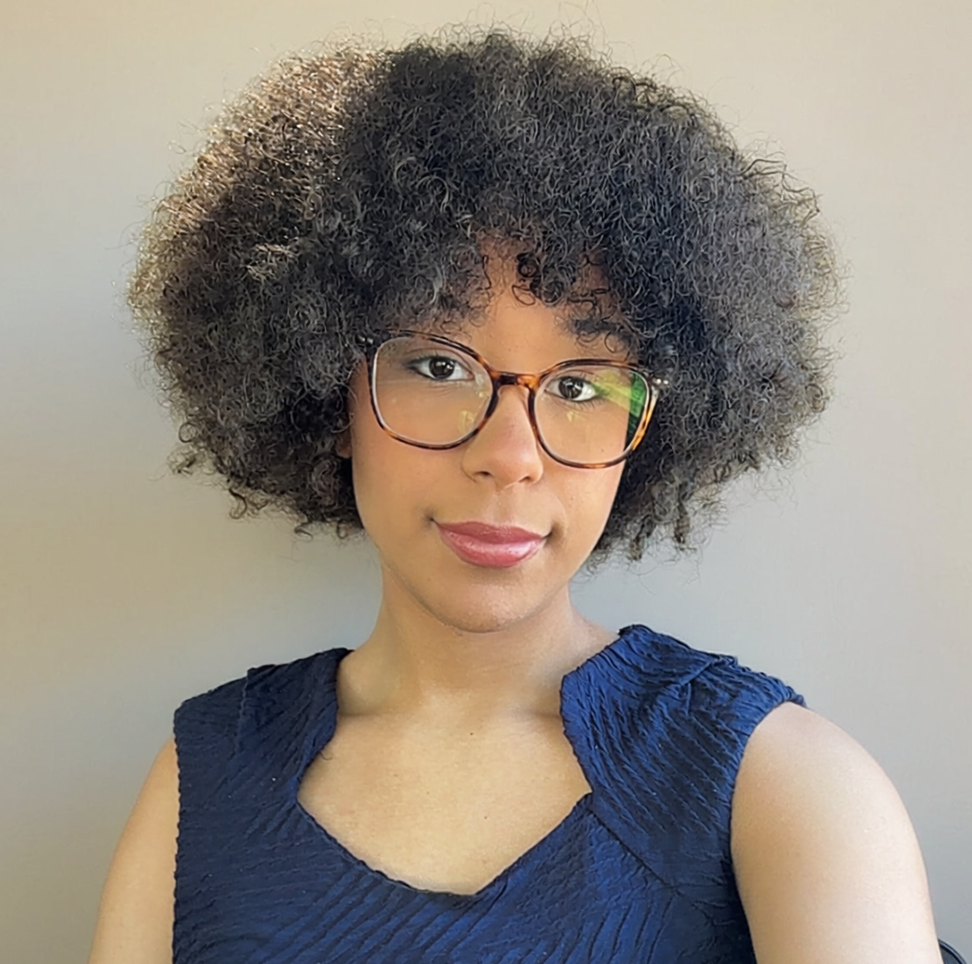
Olivia Battle is a media and communications student at East Tennessee State University in Johnson City, Tenn., with a minor in political science. She was born and raised an East Tennessean and hopes to work as a PR specialist when she graduates.