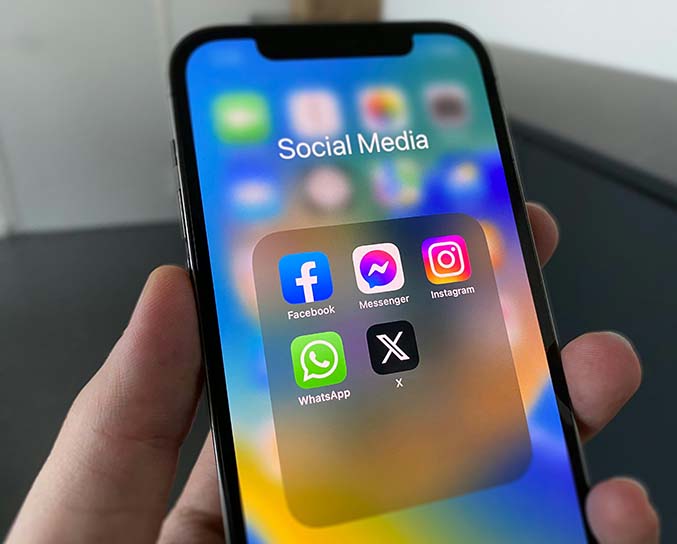
Want to make some extra cash on the side? Consider giving back to your local students by securing an adjunct teaching position. Even though the sun’s set on my Milligan University teaching career, it’ll rise again for me this fall at another university in the Tri-Cities, Tennessee area. Photo credit my left arm/hand.
What expertise do you possess?
Share it!
Last week I shared my recent experience as an adjunct PR professor at Milligan University in Elizabethton, Tenn.
This week I’ll walk you through, step-by- step, on how you can land an adjunct position.
10 Steps to Land an Adjunct Professor Position
Thinking about becoming an adjunct professor? Here’s what you need to do:
- Decide if you can balance adjunct teaching with your real job. Unless you’re retired, it can be tricky juggling both. Scheduling your time will be crucial. If you have clients, let them know what hours you’re not available. I found juggling a part-time job teaching with my PR firm’s client load extremely challenging at times, but in the end, it was all worth it.
- Earn at least a master’s degree. Generally, a master’s degree is the baseline requirement at most accredited colleges and universities. The regional accreditation standards (the ones that matter most) typically require adjuncts teaching undergraduate courses to hold a master’s degree, ideally in the subject they’re teaching. If the master’s is in a different field, most institutions want to see at least 18 graduate credit hours in the discipline you’d be teaching.
Exceptions exist, but they’re not common. The most frequent one is the “exceptional practitioner” carve-out — where someone with significant, demonstrable professional expertise in a field can teach without a graduate degree. Think a nationally recognized journalist teaching media writing, or a prominent attorney teaching a law-adjacent course. The professional credentials essentially substitute for the academic ones.
Community colleges tend to have a bit more flexibility than four-year institutions. And some specialized or vocational programs have their own standards that differ from traditional academic departments.
For PR and communications specifically, the APR (accredited in public relations) credential and agency experience carry additional gravitas in making the practitioner case. But most institutions would still prefer the degree on paper, even if they’d make an exception for the right candidate.
Bottom line: master’s degree is the rule. Exceptional practice is the exception — and it usually requires someone at the institution going to bat for you. - Create a curriculum vitae. A curriculum vitae, or CV for short, is an academic résumé. Where a standard résumé is typically one or two pages focused on work history and skills, a CV is a comprehensive document that can run several pages and covers your full academic and professional record: degrees, teaching experience, publications, research, presentations, awards, certifications, and professional affiliations.
For a teaching position, especially at the college level, a CV is the standard application document because institutions want the full picture. They’re not just hiring someone to do a job; they’re bringing someone into an academic community. The CV signals that you take that seriously. It shows your credentials, your subject matter depth, and your track record in the classroom or lecture hall.
For an adjunct position specifically, the bar is a bit lower than for a tenure-track role, but a CV is still expected. It establishes your credibility as a practitioner and demonstrates that you have the real-world expertise to teach the subject — which is a bonus for a department and their students.
In summary, a CV differs from a résumé by emphasizing your teaching-related experiences and education. - Identify nearby universities and colleges (for in-class). Search online for all the universities within a reasonable driving distance.
- Decide between online or in-class. I’ve looked at online adjunct teaching positions, but to me there’s nothing like the in-person teaching experience — especially when just starting out. But there’s certainly something to be said for the convenience of teaching online (less travel, dress professionally from the waist up, etc.).
- Identify universities and colleges offering on-line classes. If online sounds more appealing to you, or if you want to do that in addition to in-person, then conduct online research for these. I just searched for “adjunct faculty positions” on Facebook and a number of opportunities appeared. Try to find the positions that look like the best match (and best paying).
- Identify which classes you’re qualified to teach. If there aren’t any classes that are an exact match to your expertise or training, there are usually classes closely related to your expertise. For example, if there isn’t a public relations class for me to teach, I could also easily teach a journalism or marketing communications course.
- Find the right contact and apply. In my case, a professor moving onto another position connected me to the department head at Milligan University. My next adjunct gig at East Tennessee State University (ETSU) was secured by contacting the dean of the media and communication department.
Contacts and connections matter. That was how my wife Leticia landed an adjunct teacher this fall. She was recruited. She’s remained involved in the Communication and Storytelling Studies Department where she earned her masters — keeping in touch with professors, attending workshops and events, etc. While auditing a class on narrative medicine, the professor noticed how engaged she was and pulled her aside. “Have you thought of being an adjunct teacher?” The professor asked her to teach this course in the fall, since she had a full schedule herself. - If hired, sit in on the class(es) you’ll be or might be teaching. That shows you’re going the extra mile to understand the class and what’s expected. ETSU is interested in having me teach three courses this fall. I contacted the professors of these courses and arranged to sit in on a class. If you want to go the extra mile, enroll in the course before you teach it. I may be teaching “Media and You” this fall, a general education class that could have up to 80 students (a few more than the four I had at Milligan). I’m registered to audit the class this summer, which is online. I’m hoping this gives me a head start for teaching it this fall.
- Once you start teaching, make the most of it. Seek feedback, strive to improve, be willing to make changes during the course — providing they improve the learning experience for your students.
There you go. Follow those 10 steps and you can land your first adjunct teaching position.
The 3 Big Takeaways
- Sharing your expertise as an adjunct professor is a great way to “give back.”
- If you don’t have a master’s degree, get one before you venture into adjunct teaching. It’ll make landing a job much easier.
- Have fun doing it. Most students find practitioners teaching a course a nice change of pace.
Have questions about landing an adjunct position? Do ask!
Stay authentic, especially as you share your expertise as an adjunct professor!
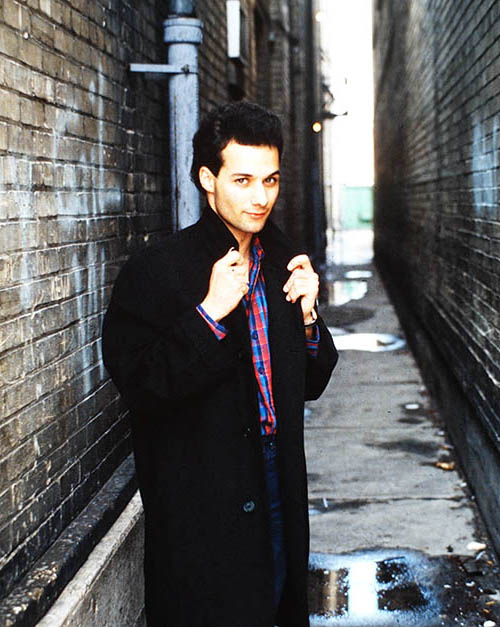
Jeffery E. Pizzino, APR (seen here in a vintage photo circa 1983 serendipitously doing a Clash impersonation in a since-forgotten location) is a spin-free public relations pro who is passionate about telling the why of your story with clarity, impact and authenticity. He began his PR career in 1987 at Ketchum Public Relations in New York City but has spent the majority of his career as a solopreneur. He’s the Chief Authentic Officer of the Johnson City, TN-based public relations firm, AuthenticityPR. He also functions as the fractional CCO for his clients.
Jeff has an MBA in Management from Western International University and a Bachelor of Arts degree in Communications — with an emphasis in PR — from Brigham Young University (rise and shout!). He’s also accredited in public relations (APR). This Milwaukee, Wisconsin native holds an Italian citizenship and plans to live and work there someday. Jeff and his storyteller wife Leticia have four children and four grandchildren. In his extremely limited nonwork hours, he studies Italiano, practices guitar, write songs, gardens, works out, disc golfs, reads, listens to New Wave music, serves as an assistant communication director in his church, watches BYU football, enjoys watching the original Mission Impossible TV series, and plays board games (mostly Dominion and Seven Wonders). No, this guy’s never bored and looking for something to do. Email Jeff.