Did you make any website updates last week?
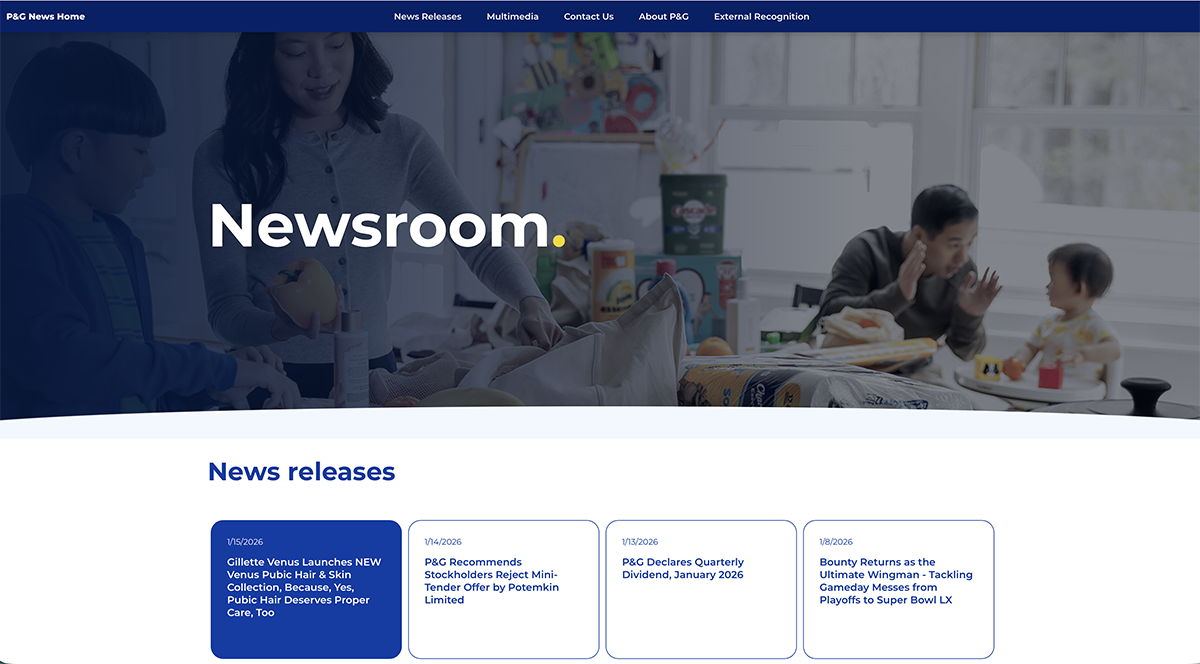
Like adding an online newsroom? Or updating your current newsroom?
No?
Well, let’s see if this week compels you to change your mind…
Breaking News… You Need a Newsroom
Last week I presented what I thought was a pretty sound argument as to why you need an online newsroom.
Now let’s talk about what actually goes in the four key pages I mentioned last week — and why each one matters for building reporter relationships.
Remember, the goal is simple: make reporters’ jobs so easy they’d be crazy not to cover you.
That means organizing your newsroom into these four essential pages. They’ll give journalists exactly what they need, exactly when they need it.
If you have a lot of news, add categories or tags so reporters can filter by topic. There isn’t any one right way to design your newsroom, but here’s what I suggest for your sub-pages…
1. News & Trends
This is where your press releases live — but remember, we’re not calling them that.
We’re going to package them as “News & Trends.”
Reporters love news. And they love trends. Two great words.
(This is why I like sharing with prospective clients that there are about 170,000 words in the English language, not counting archaic words. To tell your story with clarity, impact and authenticity, you have to know which words to choose. Sometimes you have to leave that to the copywriting pros. Or at least take their advice.)
Anyways, in this section post your press releases, opinion pieces, etc.
Important: Also include the most recent 3-6 items from this section on your newsroom home page. It’s a good tease to what’s going on in your world.
2. Press Kit
Write compelling copy, but use a talented graphic designer to make sure your press kit has a lot of visual “wow” to it. It has to pop!
Here are some ideas on what to include:
- Welcome letter (brief intro to who you are and why you’re newsworthy)
- Spokesperson bio (keep it tight, third-person)
- Topics you can speak on
- Fact sheet
- Company history
- Awards and recognitions
- Links to download high-resolution media assets (CEO headshot, products, headquarters, in-action shots, video, b-roll, etc.
Regarding the media assets, over 44% of journalists now include video with their stories, according to Cision’s 2023 Global State of the Media Report. Reporters want multimedia assets in the pitches and press releases they receive. Your online press kit is the perfect place to showcase these without requiring reporters to email you for every single file.
Some organizations also include backgrounders, case studies, or video clips. Apple, for instance, offers journalists product images, executive bios, and details on their sustainability efforts right in their newsroom.
Make it comprehensive but not overwhelming. And make your press kit downloadable — one click, one PDF, done.
Here’s an example of a very sleek press kit for a high-end car. You can view this press kit online, or with one click download it.
3. In the News
This is your credibility page — and it can send your perceived value through the stratosphere.
List your past media coverage, starting with the most recent. For each piece, include the outlet’s logo, story’s date, and the headline. Hyperlink both the logo and headline to the original story.
Why does an In the News section matter? Because reporters trust other reporters. When they see you’ve been covered by The Wall Street Journal, Forbes, or even respected trade publications, it signals credibility. You’ve been vetted. You’re legit.
Reporters are more likely to cover sources who’ve already been featured by other outlets — it signals you’re worth their time.
4. Press Contact
This should be the simplest page in your entire newsroom.
Design a simple contact form, asking for the most essential information: name, name of media outlet, phone, email, and deadline. I’d make all these fields required except for the phone.
Also include a field where the reporter can leave a message with more details.
Next to this form list the name of your main press contact — whether that’s someone on your team with PR training or an external consultant. This is extremely important for reporters who have an immediate need. Include the contact’s email and cell phone.
include this verbiage with the contact’s information: “On a tight deadline? Contact:”
Bonus Newsroom Content
You could also include your blog posts and past newsletters in your newsroom. It gives reporters additional context about your expertise and perspective — and shows them you’re actively creating thought leadership content.
Just don’t overcomplicate it. The goal is to remove friction, not add layers of confusion.
When you build a proper newsroom, you become the easy choice for the media. It shows you respect reporters’ time by giving them what they need in the format they can easily use.
And that’s exactly the kind of source they’ll want to call again.
3 Big Takeaways:
- It’s a must-have! – Your online newsroom isn’t a luxury. It’s a necessity. (If you want to maximize your press opportunities.)
- Include the four essential pages — News & Trends, Press Kit, In the News, and Press Contact — give reporters everything they need without overwhelming them.
- Make media assets readily available – Downloading assets should be a breeze in just one click. By removing any friction, you’ll increase the chances reporters will actually use your materials.
As you can see, it takes some effort to create all your online newsroom content. Think you might need some guidance, help? Schedule a call with me here.
Stay authentic — and ready to be in the news.
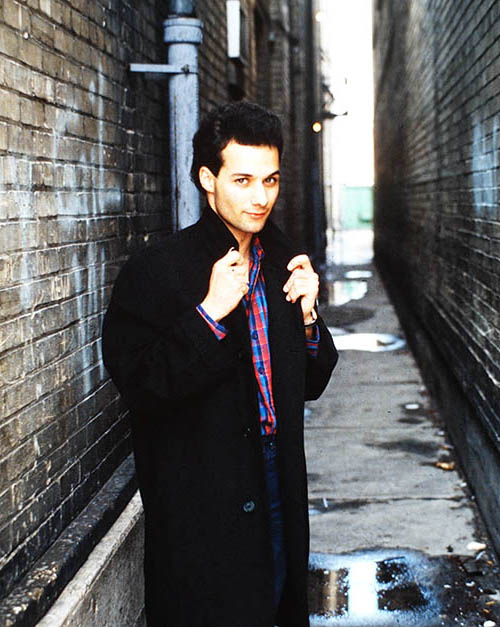
Jeffery E. Pizzino, APR (seen here in a vintage photo circa 1983 serendipitously doing a Clash impersonation in a since-forgotten location) is a spin-free public relations pro who is passionate about telling the why of your story with clarity, impact and authenticity. He began his PR career in 1987 at Ketchum Public Relations in New York City but has spent the majority of his career as a solopreneur. He’s the Chief Authentic Officer of the Johnson City, TN-based public relations firm, AuthenticityPR. He also functions as the fractional CCO for technology startup Converus.
Jeff has an MBA in Management from Western International University and a Bachelor of Arts degree in Communications — with an emphasis in PR — from Brigham Young University (rise and shout!). He’s a native of Milwaukee, Wisconsin, but also holds an Italian citizenship. Jeff and his storyteller wife Leticia have four children and four grandchildren. In his extremely limited nonwork hours, he studies italiano, practices guitar, write songs, gardens, disc golfs, reads, listens to New Wave music, serves in his church, watches BYU football, and plays Dominion and Seven Wonders. Email Jeff.