What do journalists think about being pitched story ideas?
How can you increase the likelihood your local newspapers will run your story?
In July I met up with Carol Broyles at a Johnson City, Tenn. Starbucks for a sit-down chat. I wanted you to hear the perspective of what someone who works at a local newspaper thinks about receiving press releases. She also offered tips on working with newspaper staff.
Carol is the content editor of the Kingsport Times News. Her newspaper is part of Six Rivers Media, a multi-media company locally grown and owned in Northeast Tennessee. It’s the parent company of six local, high-profile media platforms: Kingsport Times News, Johnson City Press, Six Rivers Digital, Jonesborough Herald & Tribune, Erwin Record, and Mountain City Tomahawk.
Here’s the first part of this four-part article:
Jeff Pizzino: How did you get into journalism? Was it your college major? What drew you to this profession?
Carol Broyles: In high school I worked on the student newspaper. I loved to read. I went to college at East Tennessee State University in Johnson City. My Dad said I need to be a doctor. So I was like, OK, I can do that. So I started pre-med and had a minor in communications. I really loved communications — all things words; making things make sense. I hate things that are hard to read because you should be able to simplify it and effectively communicate with people.
Meanwhile, there’s a lot of science and chemistry in pre-med, and that’s really hard! [she stops and laughs]. Soon I started to work on the student newspaper in college. Then I decided to do a double major. Although communications was not going to be a lucrative career — that’s where my heart was.
So, I started to take all journalism courses. After earning my degree in mass communications, I interned at the Johnson City Press, worked there for a while, then left to work for a PR firm for a short time. In 1991 I went to the Kingsport Times-News, which is where I’ve been ever since.
JP: OK. Wow, that’s a long time, a long career at this newspaper. But you worked for a marketing firm for a short time?
CB: It was called MedMark, a medical marketing firm. They were just starting out and not everyone was big into marketing. I was there for about a year.
JP: And what was that experience like?
CB: It was interesting. In journalism, it’s the facts. And when you’re doing your PR, you have to take a look at what the client wants and what they’re looking for, how they want things done. When you’re working for a marketing firm there’s a little bit more spin to it, it’s more positive. Whereas I was more comfortable doing news and features — but in a newspaper setting.
JP: Yes, clients have to be trained in providing just facts, not fluff.
CB: And you can’t look at your clients and say, “This is how the Associated Press says it should be done.” Because they’re paying you, and maybe this is how they wanted it…
JP: I tell them they have to think and write like a reporter — I seriously do. I’ll say, “You have to write what they’re going to use. You need to know what they’re looking for — write for their audience, not yours. Not who you think you need to write for.” Right?
CB: Yes, but only if they want it in the newspaper. Actually, what I was referring to was a newsletter they were sending out to all of their clients.
JP: Oh, OK. That’s different. Let’s help people understand what it’s like on your end. How many story pitches do you receive daily or weekly?
CB: At my newspaper I handle feature pages, the living section, and opinion pages — and various community news. If I’m gone for a week on vacation, I’ll come back to about 800 emails. A lot of it is spam, people trying to sell something. I have to weed through all of that and try to find the legitimate emails. People send me information about community events, or requests to cover whatever they have going on.
JP: So, even in a smaller market like Kingsport, you get about 100 emails a day?
CB: Yes, but it’s not all Kingsport specific. I’m simply on someone’s mailing list that’s being distributed nationwide.
JP: What percentage of emails received are legitimate pitches that show they did research about what type of news is relevant to your newspaper?
CB: I would estimate about 10%. If the pitch comes from a local source, it’s usually relevant. But if it’s from someone who’s sending emails to every newspaper across the country, then it’s usually not relative. Sometimes I get regional stuff from North Carolina or Knoxville that can have a local tie-in.
JP: Those sending their press releases everywhere to everyone without thinking about proximity or relevance are doing what we call the “spray-and-pray” approach. What percentage of your paper would you say comes from outside sources, as opposed to reporter-generated or wire stories?
CB: A small percentage. In my section, it’s more than others. We also have freelancers, which I consider our sources. The community news articles — the unsolicited articles — it’s not large, but it’s important.
The 3 Big Takeaways
- Journalists sift through hundreds of emails weekly — in some cases only about 10% are relevant.
- Local sources with community relevance rise to the top of a local newspaper editor’s inbox.
- “Spray-and-pray” press releases don’t work — reporters want news written for their audience.
Did you feel like this interview was insightful? Did it give you ideas on how to work with your local newspapers more effectively? Do share!
Stay authentic!
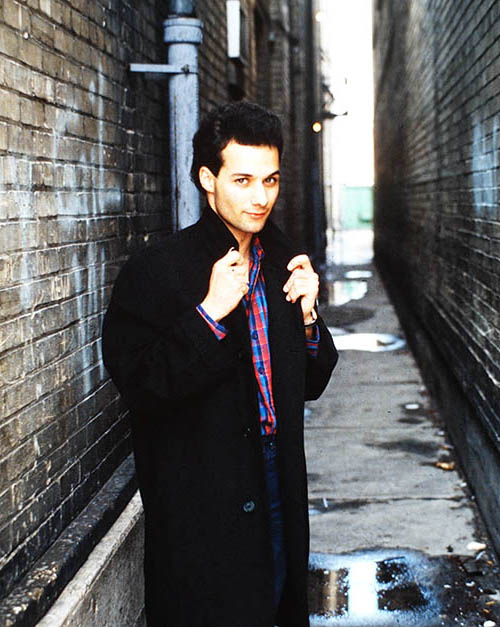
Jeffery E. Pizzino, APR (seen here in a vintage photo circa 1983 serendipitously doing a Clash impersonation in a since-forgotten location) is a spin-free public relations pro who is passionate about telling the why of your story with clarity, impact and authenticity. He began his PR career in 1987 at Ketchum Public Relations in New York City but has spent the majority of his career as a solopreneur. He’s the Chief Authentic Officer of the Johnson City, TN-based public relations firm, AuthenticityPR. He also functions as the fractional CCO for technology startup Converus.
Jeff has an MBA in Management from Western International University and a Bachelor of Arts degree in Communications — with an emphasis in PR — from Brigham Young University (rise and shout!). He’s a native of Milwaukee, Wisconsin, but also holds an Italian citizenship. Jeff and his storyteller wife Leticia have four children and four grandchildren. In his extremely limited nonwork hours, he studies italiano, practices guitar, write songs, gardens, disc golfs, reads, listens to New Wave music, serves in his church, watches BYU football, and plays Dominion and Seven Wonders. Email Jeff.